
 English
  Español
  Français
  Deutsch
  Italiano
  Português
  Nederlands
 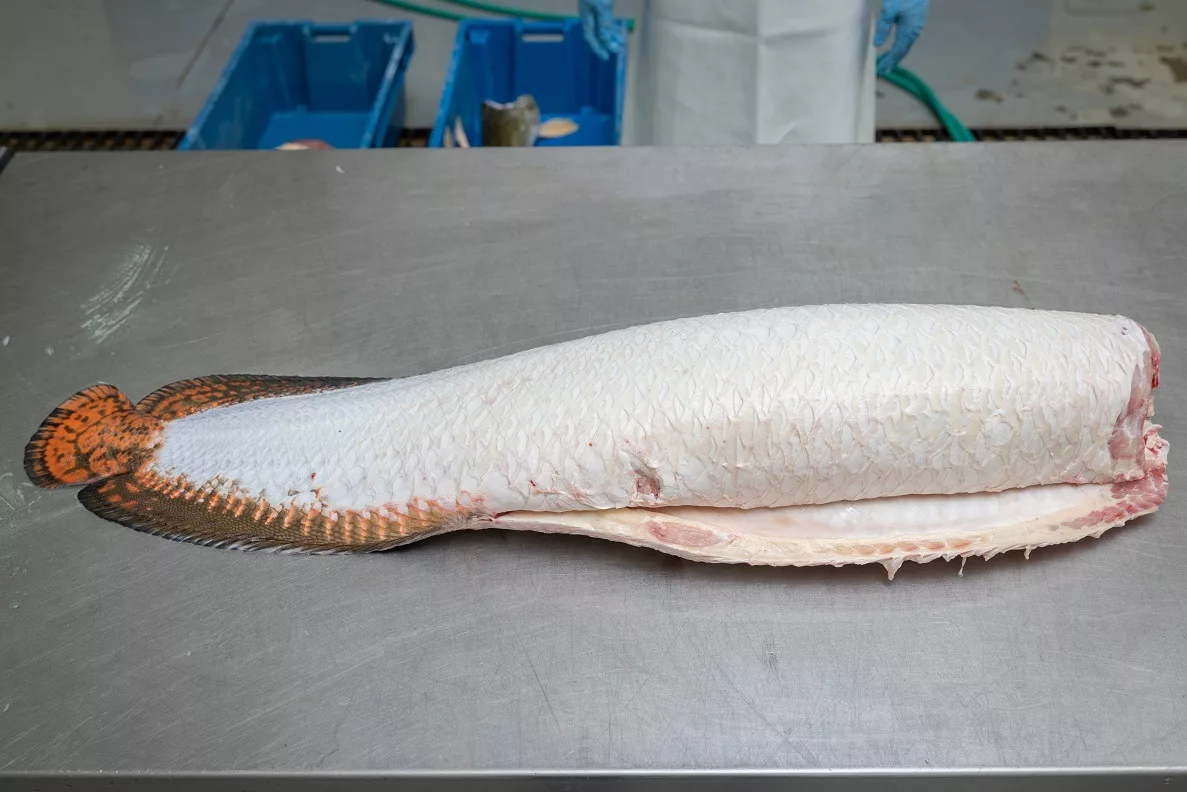 On request
Eviscerated
Whole fish, eviscerated.
| Form | Whole, eviscerated |
| Cold chain | Fresh / frozen |
| Origin | Ucayali, Peru |
Our flagship species
The giant of the Amazon. Firm, white, boneless flesh, raised responsibly in its native habitat and delivered to professional kitchens all year.
Available Now
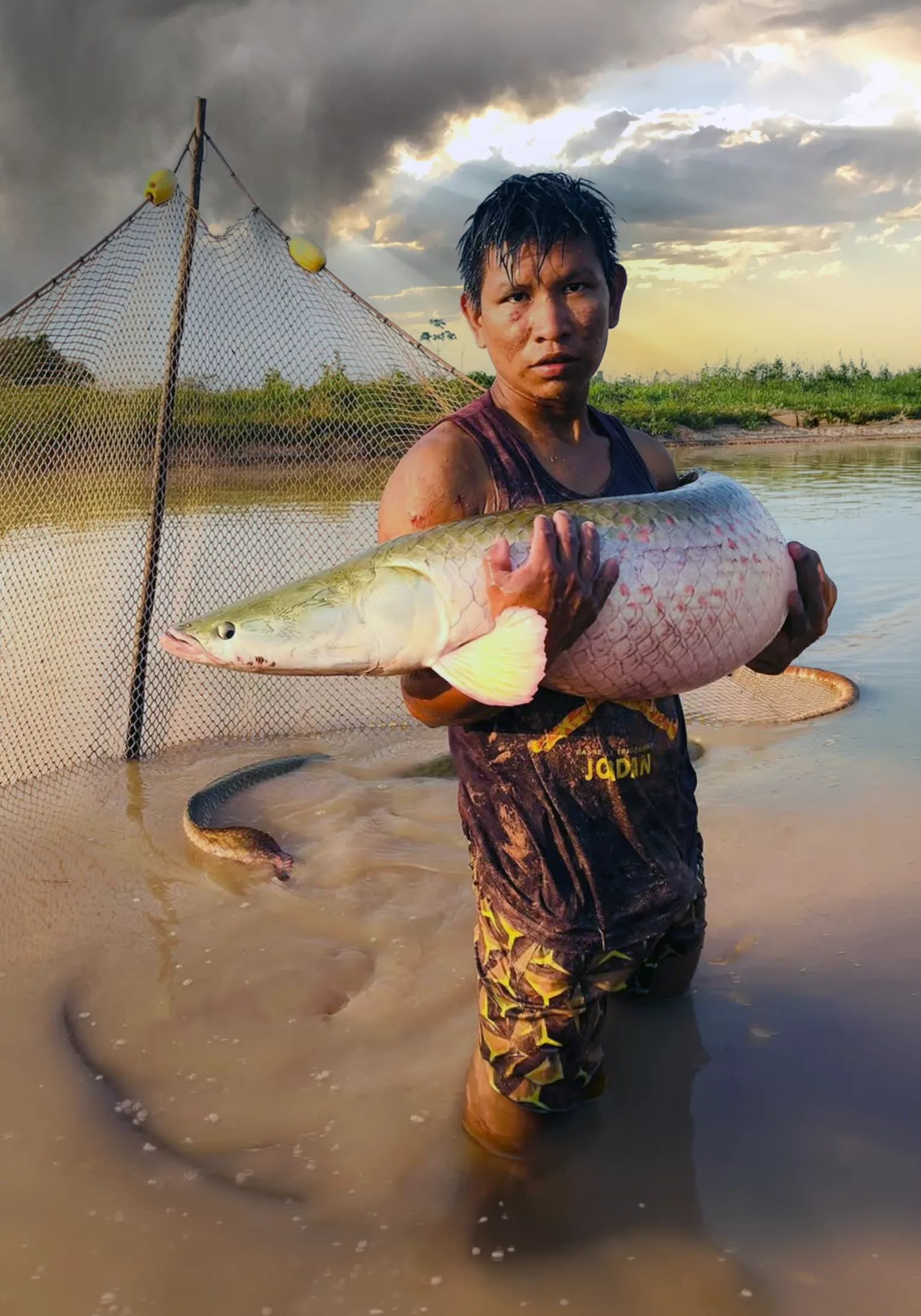
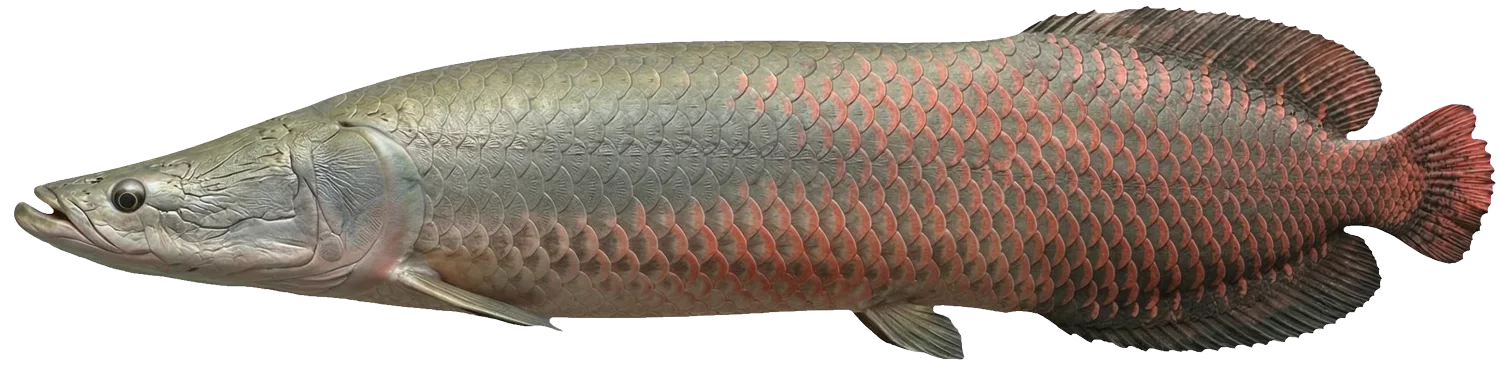
Arapaima gigas, known as pirarucu in Brazil
Paiche is the great white fish of the Amazon, prized across Peru and Brazil for generations and still new to most kitchens beyond South America. Arapaima gigas is one of the largest freshwater fish on Earth, an air breather that rises to the surface of the warm, flooded forests where the species has lived for millions of years. Ours is raised at origin in the Ucayali region of the Peruvian rainforest, in its native habitat, without antibiotics, and traceable to a single farm and a single source.
On the board it shows a firm, bright white flesh with a broad, even flake and very little fat. Filleted, it is completely boneless, a clean loin with no pin bones to trim around, and it carries a brigade from ceviche and tiradito to a hard sear, a slow grill, or the smoke of a moqueca. Its collagen sets a deep golden crust under high heat and holds its structure where softer fish break, and it stays forgiving on the pass because the flesh is rich enough not to dry. The flavor reads mild and clean, closer to the river than the sea.
Because it is farmed in its own waters, paiche reaches your kitchen year round rather than by season, with none of the pressure that follows wild Amazonian stocks. Its mercury is laboratory tested below 0.05 milligrams per kilogram, well under the FDA limit, a reassurance few large fish can offer. It sits in the culinary class of halibut and Chilean sea bass, with the same density and presence under the knife, yet its character is entirely its own.
On the plate
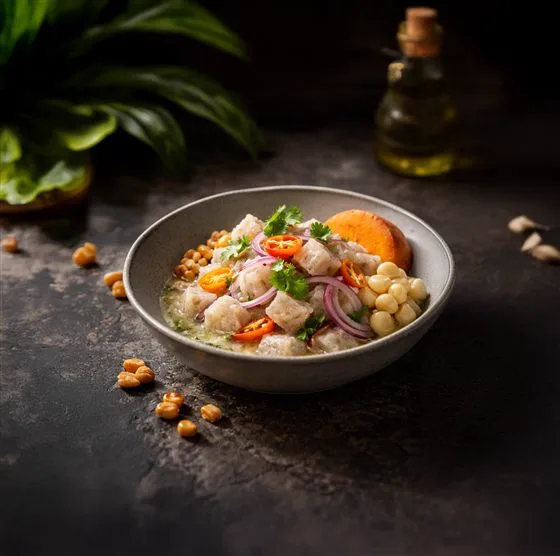
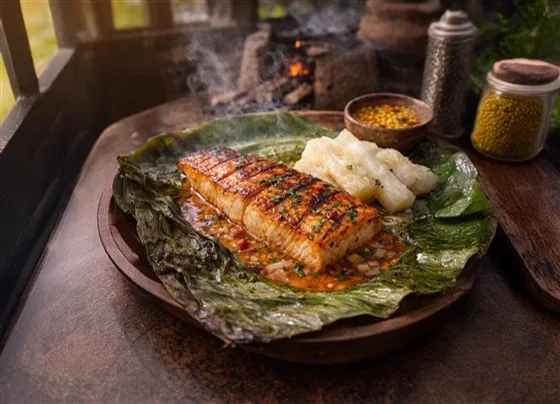
Few fish move so easily between kitchens. In Peruvian cooking it is cured in leche de tigre for ceviche and tiradito, simmered into a sudado, or wrapped in bijao leaves and steamed as patarashca. In Brazilian kitchens it carries a moqueca or a caldeirada without falling apart. For the modern brigade it slices cleanly for crudo, sears to a crisp edge, pan roasts to a moist center, grills over open flame, and holds its structure through sous vide and confit. It takes marinade and seasoning generously and never collapses under heat.
For a professional kitchen, that reliability is the real value. Uniform boneless fillets give predictable portions and almost no waste. The firm structure survives service, transport, and chilling. And because it is farmed at origin and shipped IQF, the paiche arrives at the same standard every week of the year, from the Amazon to the pass.
Specifications
Cuts, formats, packaging, and cold chain for professional buyers.
| Cuts & Formats | Skinless boneless fillets and portions, IQF frozen, vacuum-packed. Fresh on request. |
|---|---|
| Whole Fish | Approx. 33 lb (15 kg) per fish. |
| Fillet Size | 6.6 to 7.7 lb (3 to 3.5 kg) per fillet, skinless and boneless. |
| Portions | Cut to each chef's or buyer's specification, from 4.5 oz (125 g) to 9 oz (250 g), adaptable on request. |
| Master Carton | 22 lb (10 kg) per master carton. |
| Shelf Life | 24 months frozen at 0°F (−18°C). |
| Allergens | Fish. Nothing else is added to the product. |
| Culinary Profile | Clean, elegant, structured white flesh with stable cooking performance. |
| Availability | Year-round. |
| Best For | Ceviche, patarashca, grilling, searing, refined seafood menus. |
| Origin | Ucayali Region, Peruvian Amazon, single farm, single source. |
Formats
On requestWhole fish, eviscerated.
| Form | Whole, eviscerated |
| Cold chain | Fresh / frozen |
| Origin | Ucayali, Peru |
On requestWhole fish, headed and gutted.
| Form | Headed & gutted |
| Cold chain | Fresh / frozen |
| Origin | Ucayali, Peru |
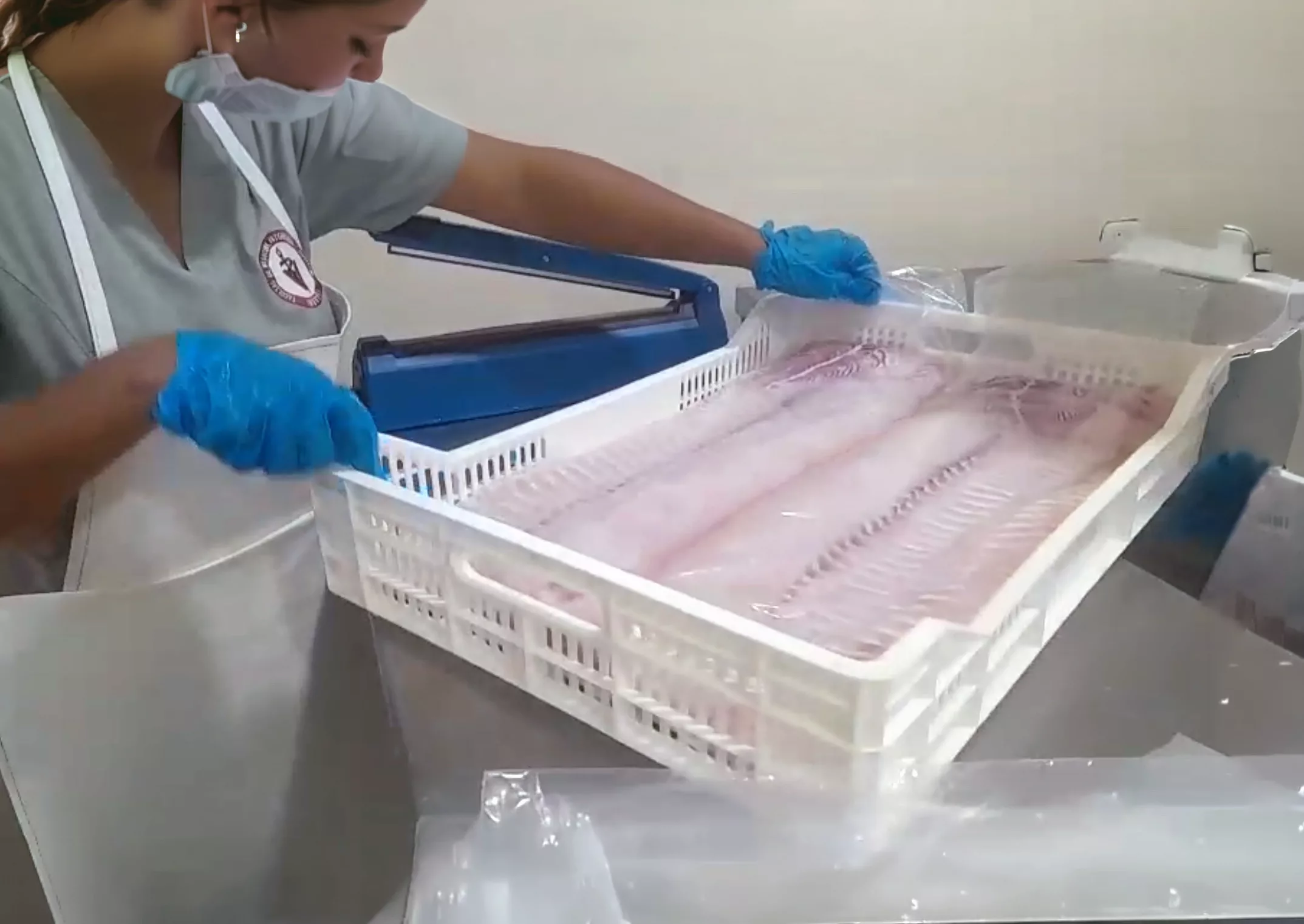 Available now
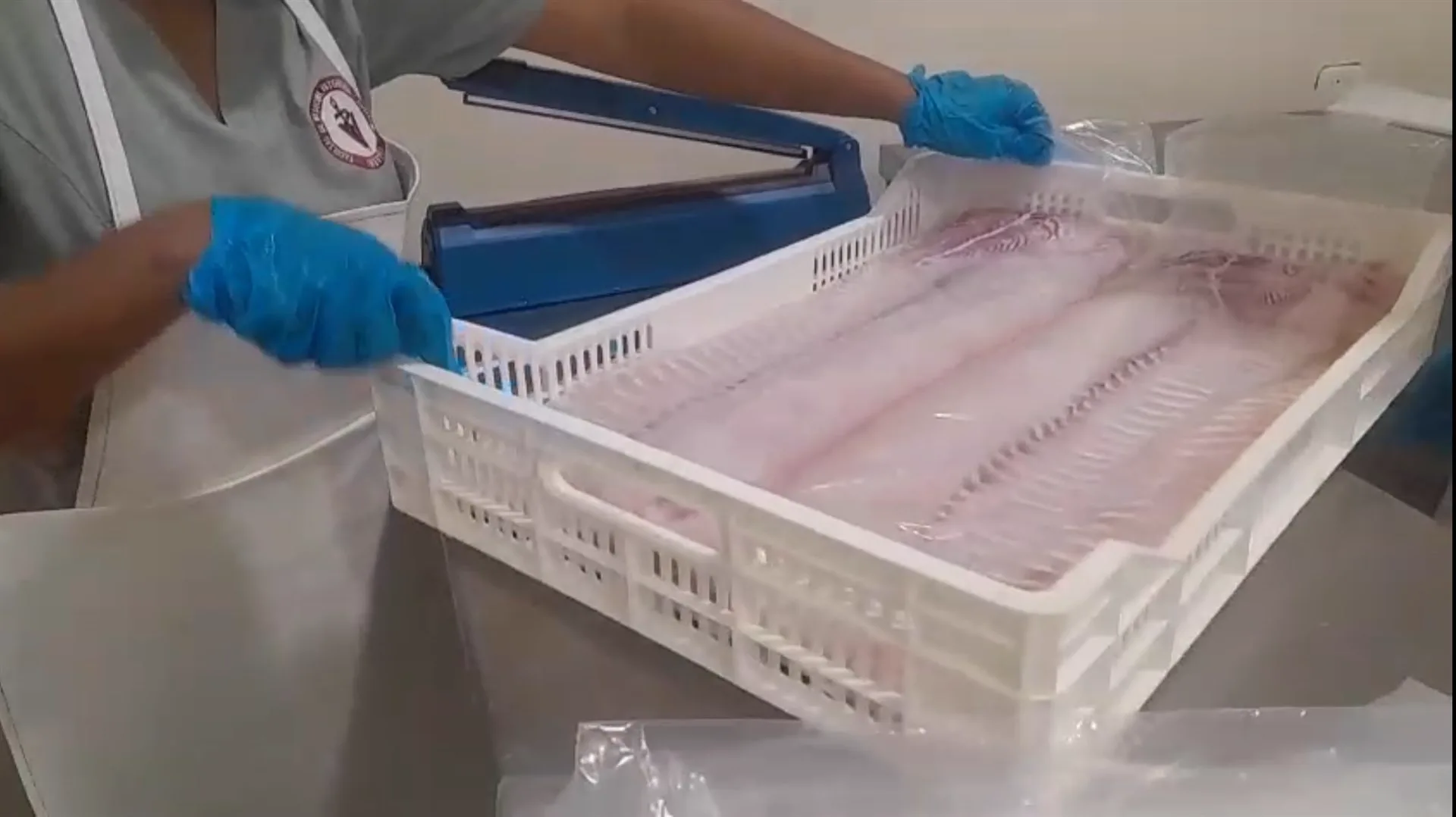
Skinless, boneless, individually quick-frozen.
| Cut | Skinless, boneless |
| Cold chain | Frozen -18°C |
| MOQ | Pallet quantities |
 On request
Skinless, boneless, fresh on request.
| Cut | Skinless, boneless |
| Cold chain | Fresh / chilled |
| Lead time | Per account |
 On request
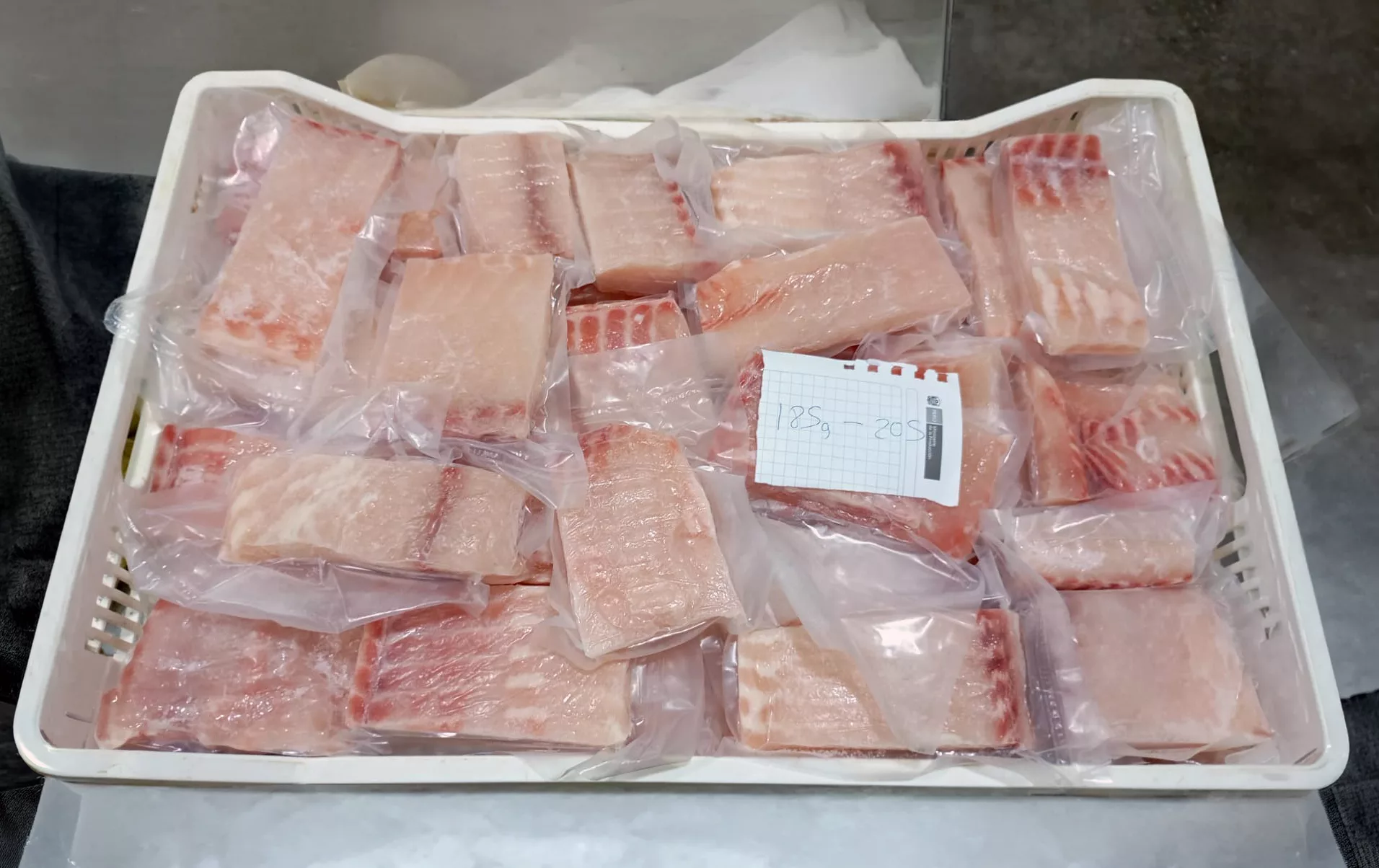
Cut to each buyer's specification.
| Cut | Portion-ready |
| Cold chain | Frozen -18°C |
| MOQ | Pallet quantities |
For professional kitchens
Eight reasons this Amazonian white fish earns a place on serious menus.
Paiche has a clean and delicate flavor with no muddy notes. It carries citrus, smoke, and sauce without losing its own character.
The flesh is substantial on the fork yet tender at the bite, closer to a fine meat than to a flaky fish.
Published research on paiche describes strong water holding capacity. On the line that means fillets that forgive a busy pass.
Fillets of 3 to 3.5 kg let you cut thick portions that plate with real presence.
Every fillet arrives skinless and boneless. Portion straight from the board with no pin bones to pull.
Plancha, charcoal, and a hard sear. The flesh takes color and holds together under serious heat.
Serve it raw, cured, seared, roasted, or slow cooked. One fish covers the cold bar and the hot line.
An Amazonian story with a taste to match. Paiche gives your menu a dish guests ask about.
White fish comparison
Paiche beside the white fish your menu already knows, rated on what matters at the pass.
Peruvian and Brazilian heritage
Paiche, or pirarucu, and doncella carry an Amazonian lineage no other fish on this list can claim, prized across Peru and Brazil for generations, from ceviche and tiradito to moqueca.
Met Not met Each rating is scored to three marks.
| Amazonian Reserve Paiche Arapaima gigas | Doncella Pseudoplatystoma punctifer | Chilean sea bass Patagonian toothfish | Halibut Pacific halibut | Dover sole Solea solea | |
|---|---|---|---|---|---|
| Flavor profile | Clean and mild with gentle sweetness | Delicate and refined | Rich and buttery | Mild and lean | Delicate and sweet |
| Cooked texture | Meaty, large tender flake | Fine and silky | Soft and fatty | Firm, can dry fast | Fine and firm |
| Moisture in cooking | 3 of 3Stays juicy through a busy pass | 2 of 3Holds moisture with a lighter touch | 3 of 3 | 1 of 3 | 2 of 3 |
| Raw flesh color | Pale white | White with rosy tone | Snow white | Bright white | Ivory white |
| Cooking tolerance | 3 of 3Forgives an extra minute on the fire | 2 of 3Best cooked with attention | 3 of 3 | 1 of 3 | 1 of 3 |
| Boneless format | 3 of 3Skinless boneless fillets, nothing to pull | 3 of 3Skinless boneless fillets on request | 2 of 3 | 2 of 3 | 2 of 3 |
| Portion thickness | Thick center cuts | Medium fillets | Thick fillets | Thick steaks | Thin flat fillets |
| Flake structure | Broad and defined | Fine | Large and oily | Large but fragile | Fine and delicate |
| Searing and crust | 3 of 3Deep golden crust without drying | 2 of 3Delicate crust, gentle heat | 2 of 3 | 2 of 3 | 1 of 3 |
| Ceviche and acid work | 3 of 3Firm dice, stays bright in leche de tigre | 3 of 3Silky cure, prized for tiradito | 1 of 3 | 1 of 3 | 1 of 3 |
| Versatility across the menu | 3 of 3Cold bar to hot line on one SKU | 2 of 3Shines in refined preparations | 2 of 3 | 2 of 3 | 2 of 3 |
| Year round supply | 3 of 3Farmed, available every month | 3 of 3Available in Peru, growing abroad | 2 of 3 | 1 of 3 | 1 of 3 |
| Low mercury | 3 of 3Lab tested below 0.05 mg per kg | 3 of 3Expected low for the farmed product | 1 of 3 | 1 of 3 | 3 of 3 |
| Traceability lot by lot | 3 of 3Every lot documented pond to box | 3 of 3Same farm, same documentation | 1 of 3 | 1 of 3 | 1 of 3 |
| Menu differentiation | Rare on US menus | Nearly unknown outside Peru | Common | Common | A familiar classic |
| Culinary heritage | Centuries of Amazonian tradition | Prized across Peru | Modern fine dining staple | North Atlantic classic | Classic of French cuisine |
| Thaw performance | 3 of 3Thaws clean with little loss | 3 of 3Thaws clean with little loss | 2 of 3 | 2 of 3 | 2 of 3 |
| Holding during service | 3 of 3Holds on the pass without collapsing | 2 of 3Serve promptly for best texture | 3 of 3 | 1 of 3 | 1 of 3 |
| Sauce compatibility | Carries sauce without fading | Best with light sauces | Rich enough alone | Needs butter or fat | Made for butter sauces |
| Antibiotic free raised | 3 of 3Raised without antibiotics | 3 of 3Raised without antibiotics | 2 of 3 | 2 of 3 | 2 of 3 |
| Farmed at origin | 3 of 3Raised at origin in Ucayali | 3 of 3Raised at origin in Ucayali | 0 of 3 | 0 of 3 | 0 of 3 |
| CITES documented trade | Appendix II, fully documented | Not listed | CCAMLR managed | Not listed | Not listed |
For the buyer
Both reserve fish are farmed at origin under SANIPES and HACCP, cut to boneless portions on your spec, and fully traceable lot by lot. Paiche is available year round. Doncella is available in Peru and in development for international markets.
Paiche mercury is lab tested below 0.05 mg/kg, well under the FDA limit of 1.0 ppm. Doncella is pre launch, so its value is the expected figure for the farmed product. Data for the other fish is drawn from public sources and can vary by origin and lot.
Legal and protected
Paiche is a protected Amazonian species, listed on Appendix II of CITES, the international convention that governs the trade of wild animals and plants. Appendix II does not mean the fish is off limits. It means its trade is watched and controlled so that wild populations are never put at risk. The wild paiche was fished hard across the Amazon for generations, and that oversight is what allows the rivers to recover.
We raise ours at origin, in its native waters in the Peruvian Amazon, so nothing we sell is ever taken from the wild. Every fish that reaches your kitchen was farmed, not caught, which means choosing our paiche takes pressure off the wild rivers instead of adding to it. It is a rare thing, a luxury fish whose supply helps the species it comes from.
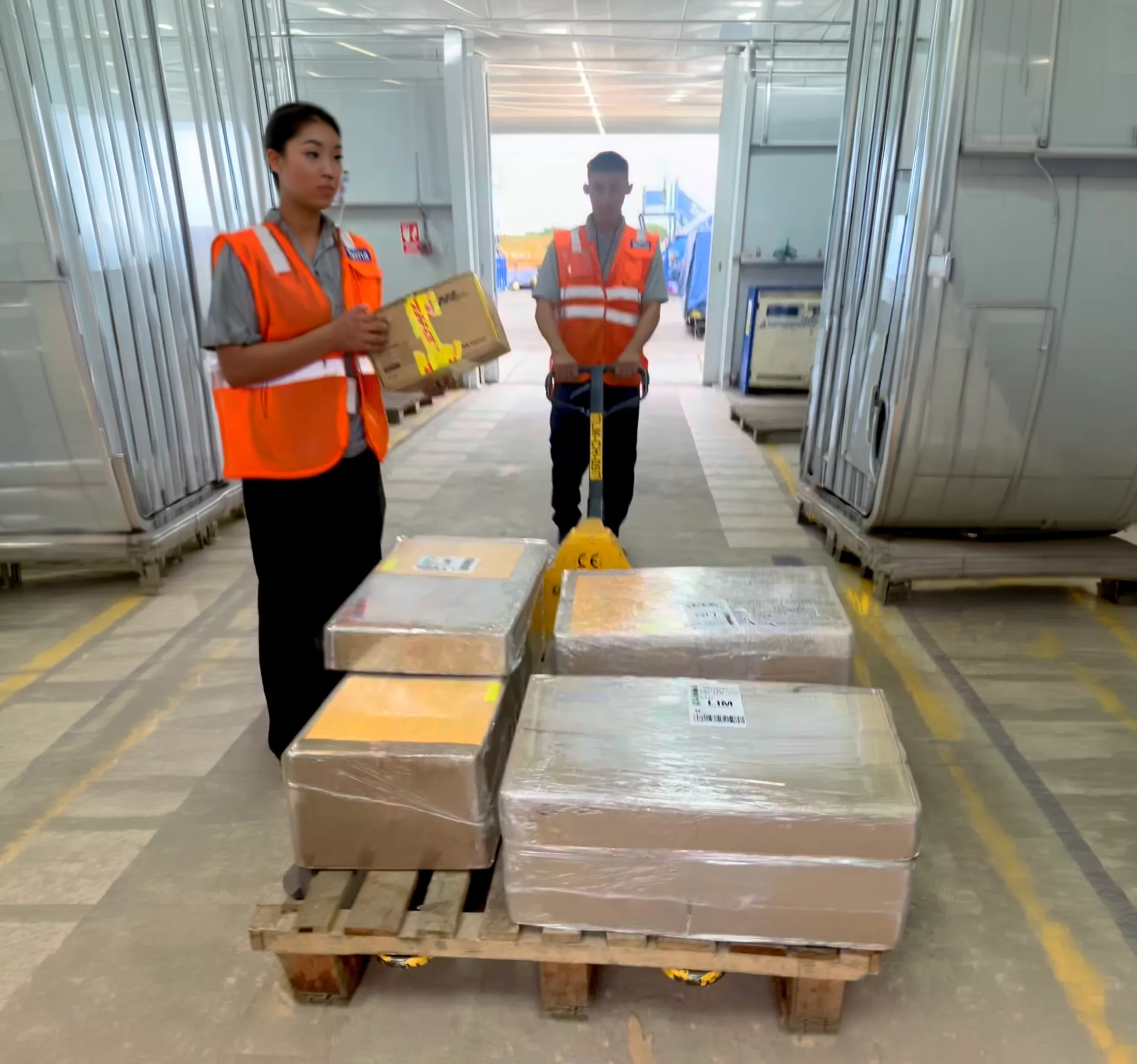
Every shipment leaves Peru under a CITES export permit issued by the national authorities, granted only when the fish was raised lawfully and its trade does no harm. For you that means each order arrives fully legal, documented, and traceable at every step, with the paperwork already handled. Clean provenance, on paper as well as on the plate.
In the kitchen
From Amazonian fire pits to the modern pass
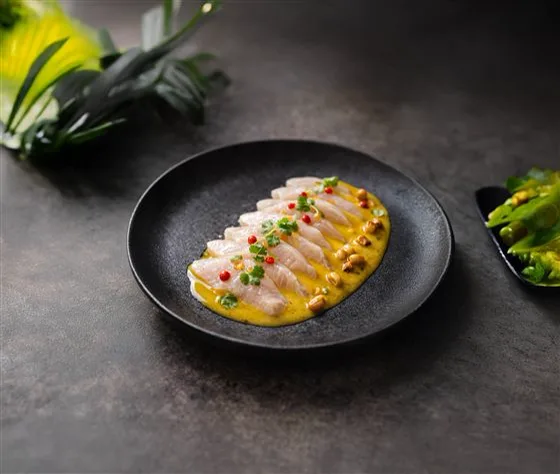
In the kitchens that know it, the paiche is treated like a prime cut. Its boneless loin gives chefs a clean canvas, firm enough to hold a hard sear and mild enough to carry citrus, smoke, and chili without losing itself. The same fish moves from a street ceviche to a tasting menu without changing its nature.
Peruvian cooks reach for it first. They cure it in leche de tigre at the last moment for ceviche and tiradito, so the flesh stays bright and firm against the acid, then wrap and steam it in bijao leaves as patarashca, the way it has been cooked on the river for generations.
In Brazilian kitchens it carries a moqueca or a caldeirada through the long simmer where a softer fish would break, holding its shape while it takes on coconut milk, palm oil, and tomato. Fried in thick pieces, it becomes the crisp pirarucu that tables share by the handful.
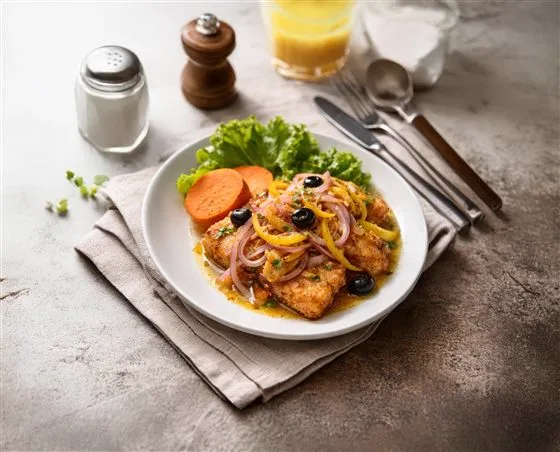
On a tasting menu the paiche rewards precision. It slices cleanly for crudo, takes a confit or a sous vide bath without drying, and plates with the structure chefs expect from halibut. From a wood fire to the modern pass, it gives the same firm flake every service.
In the Kitchen
Ceviche, tartare, grilling, pan-searing, poaching, the paiche performs across the full range of professional techniques.
For enquiries, tastings, and orders, get in touch and we will connect you with the right supply route.
For Professional Buyers
Amazonian Reserve supplies professional kitchens across South America, the United States, Canada, and Europe. Share your region with us and we will direct you to the appropriate sourcing channel.
Contact Us
Discover paiche in your own kitchen. Send us a few details and we will arrange a sample or tasting, with a response within one business day.