
 English
  Español
  Français
  Deutsch
  Italiano
  Português
  Nederlands
 Sustainability
The Amazon gives us everything, we protect this treasure
Sustainability is the operating condition of a farm that lives within the ecosystem on which it depends.
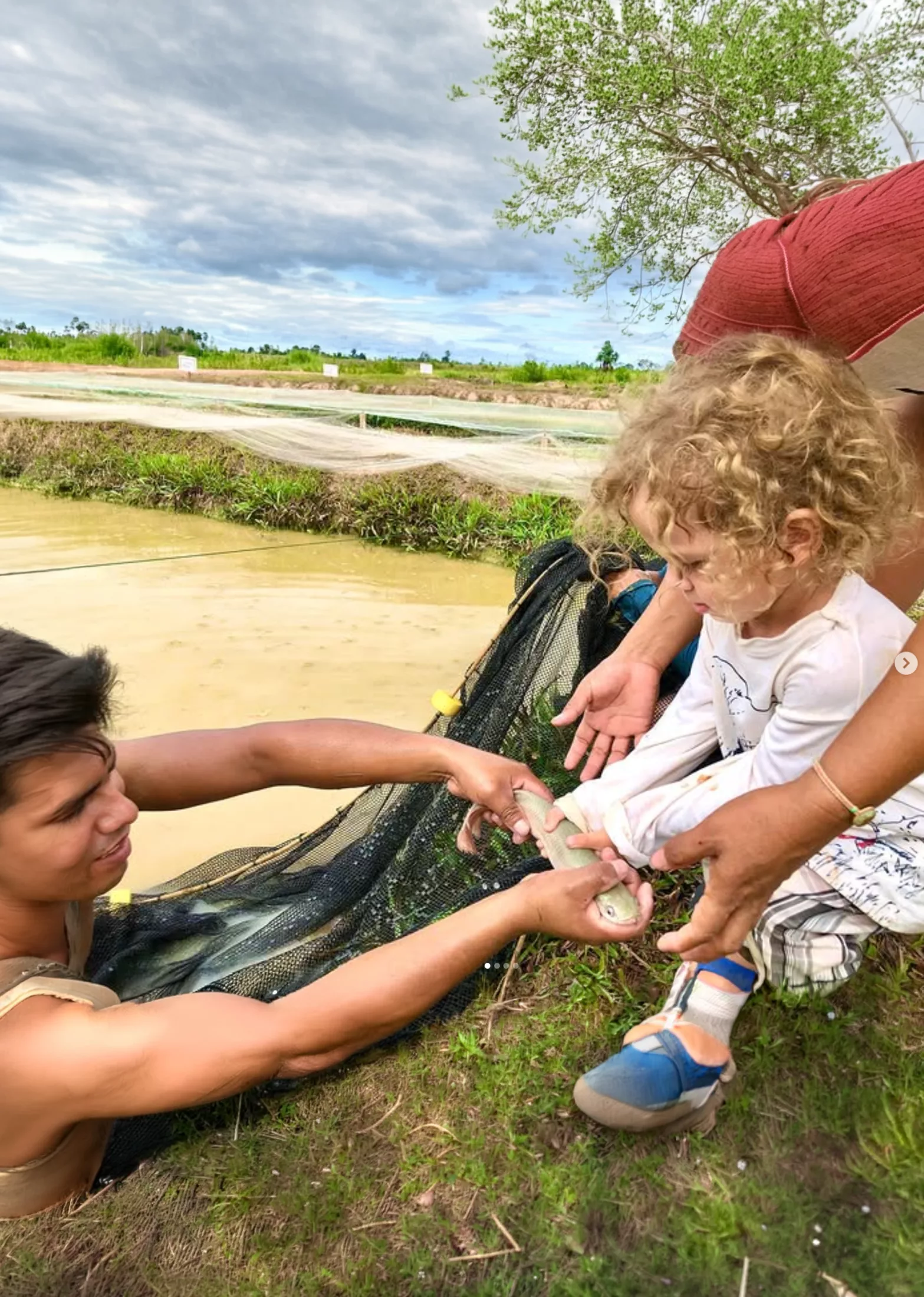 The farm and its families, one generation to the next
Community
The aquaculture farm grows alongside the community that surrounds it
True sustainability includes human beings. Our aquaculture farm provides stable, skilled employment in a region where formal work is scarce, with training in international food safety standards, safe working conditions, and long-term positions that allow families to plan for the future.
This is a serious operation, not a symbolic project, and it was built by the people of this region for this region. From hatchery to harvest, the work is carried out by a local team trained in modern aquaculture, women and men from Ucayali, not recruited from elsewhere. Nothing was imported and then left to run on its own.
How the work is done matters as much as the work itself. The people who raise these fish are trained, fairly compensated, and regarded as the reason the farm exists, not as a cost to be reduced. When the fish reach the kitchen of another country, the value does not flow entirely elsewhere. A share remains in the hands that earned it and in the region that made it possible.
When chefs and culinary professionals purchase our fish, a portion of that value settles here, in Ucayali, as wages, as skills, as a professional future tied to the survival of the forest. The ambition extends beyond a single farm. It is to demonstrate that the Amazon can produce fish at the highest level on the world stage without exhausting the land or the people who raise them.
Natural habitat
Raised where nature intended them to thrive
Our species are not transplanted into artificial environments. They grow in controlled ponds at the heart of their native region, fed by the underground waters of the Ucayali basin, under the same sun and the same seasons their wild ancestors have always known.
The water itself does the work. Warm, slow, carrying the minerals the basin has held for millennia, it sustains the temperature and rhythm these fish are built for. Nothing is heated, chilled, or chemically corrected. The water table from which the water is drawn and monitored feeds the ponds where our fish grow.
The distribution of fish across ponds follows the same logic. Fish are stocked at densities that allow them to move and feed as they would in open water, never crowded into the kind of stress that forces growth and invites disease. They grow at their own pace, season after season, as the Amazon has always kept time.
This is the deepest form of animal welfare in aquaculture, an environment for which the species evolved. It shows in the health of the fish and in the quality of their flesh.
Welfare here is not something added. It is the starting condition. A fish raised in its own world has nothing to overcome, no artificial stress to mask, no shortcut to conceal. What arrives in your kitchen is simply the result of a life lived where it was always meant to be.
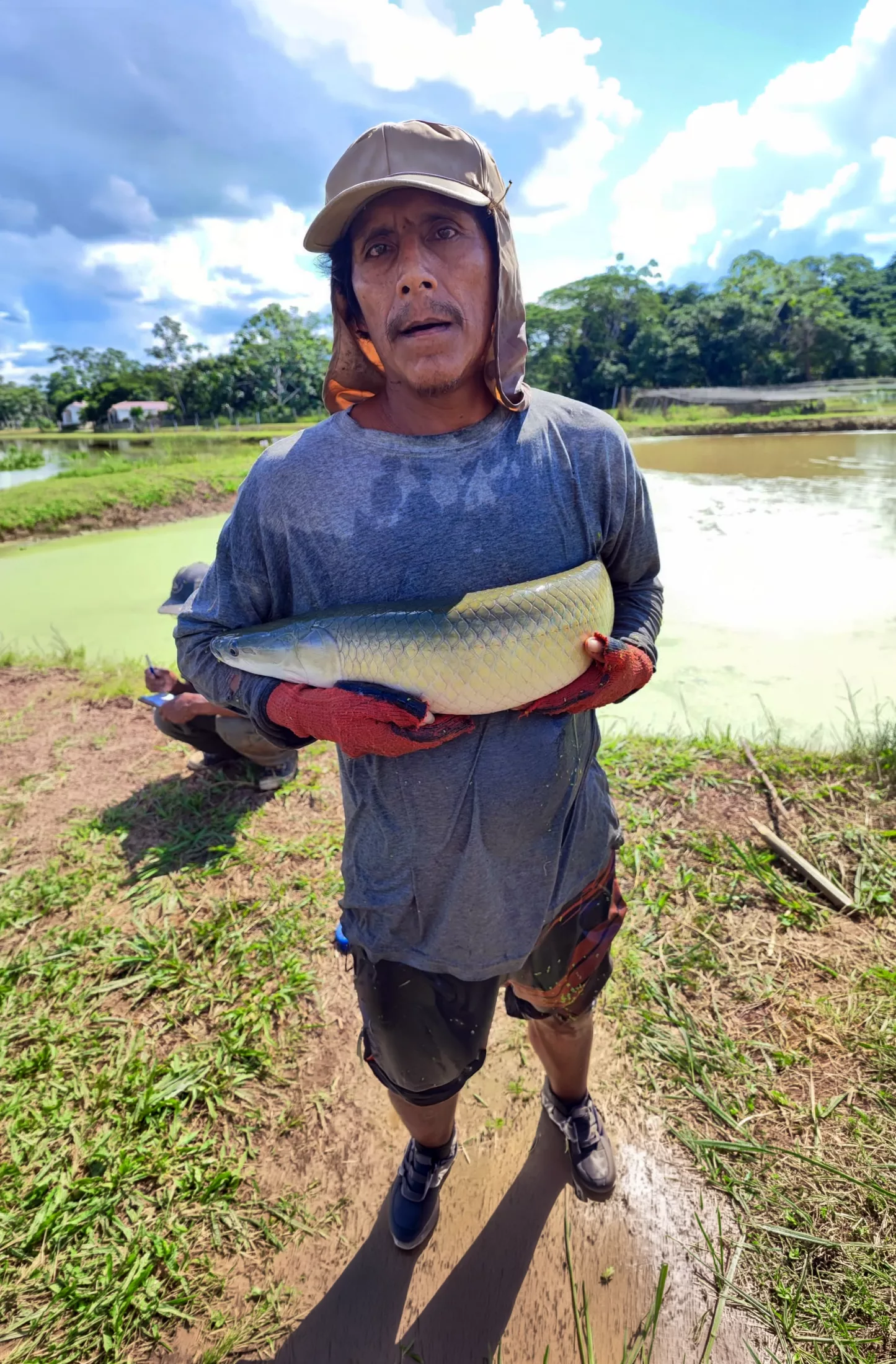 Raised in the waters of its native basin
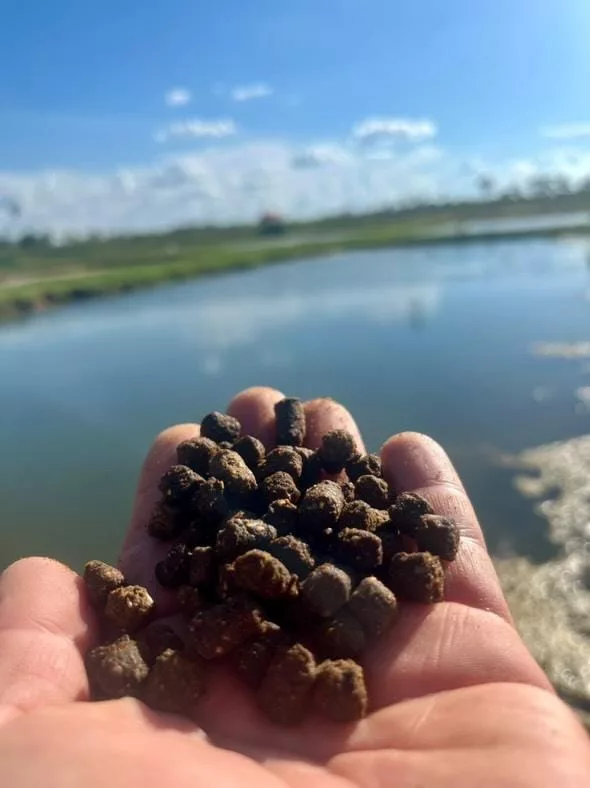 Clean feed, nothing wild, nothing added
Pure & Clean
No antibiotics, no hormones, no compromises.
Our fish receive no antibiotics, no added hormones, no colorants, and no bleaching agents. Ever. Nothing wild enters their diet either. The feed that raises them contains no fish sourced from wild catch.
It all begins with the water. Ours is not drawn from the river. We go deep into the water table beneath the farm, into pure groundwater filtered by the earth itself, and that is the only water our fish ever know.
From there, the water follows a single, controlled circuit, designed and managed manually by our team. Each pond receives clean water and passes it in one direction only, so that no two ponds ever share the same water and nothing can travel from one to the other. Cross-contamination has no pathway. This is the level of control demanded by our certifications, both those we hold today and those we are working toward.
THE FEED PROGRAM
Hand-fed, raised for the table
Feed is the foundation of flesh quality. Each day, along the pond banks, our fish receive professionally formulated pellets, tailored to each species and each stage of growth, protein-rich for juveniles, balanced for grow-out, always sourced from controlled inputs.
This feed is ours. We developed it for these fish and for every stage of their growth, from ingredients we control directly, rather than the wild fish meals that make up most aquaculture feeds. What the fish eats is governed with the same rigor as the water in which it grows.
No feed of unknown origin enters the farm. Every batch is documented, every formula recorded, and feed lots are part of the traceability file for each fish, from hatchery to harvest.
Water, feed, and daily care together reach a level of quality this region has never known. Nothing to correct, nothing to conceal, a flesh raised in purity, from the first day to the last.
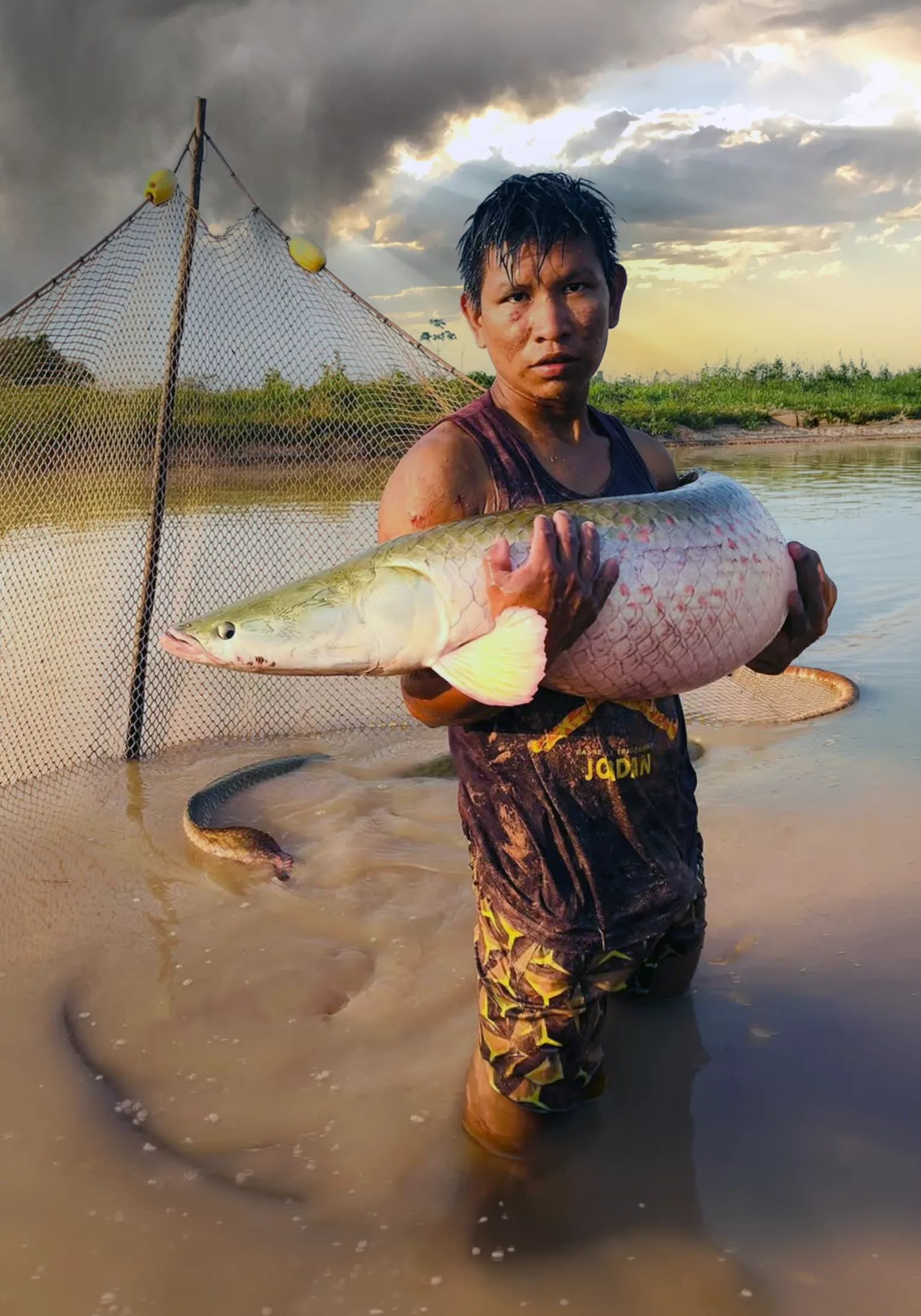 Fed by hand, at every stage of growth
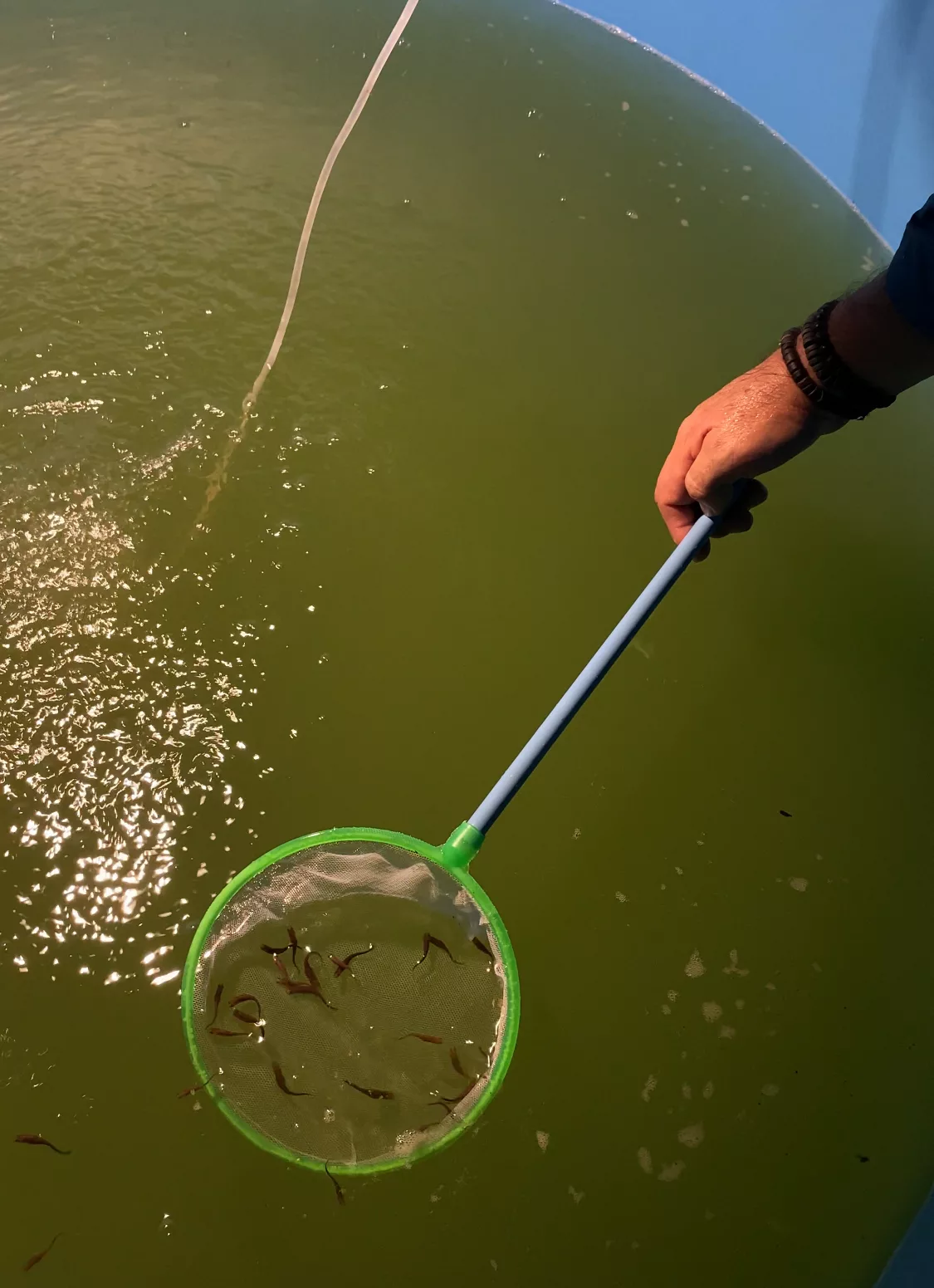 Fingerlings raised here, never taken from the river
Water & Ecosystem
The forest stands tall
Our ponds sit within the landscape, not against it. The surrounding rainforest is preserved, it shades the water, anchors the soil, and sustains the microclimate the fish require.
Water management is constant, quality monitored continuously, exchanges controlled, and discharge handled responsibly. An operation that pollutes its own river has no future, and ours depends on waters that must remain what they are.
There is a quieter benefit, further upstream. Wild paiche was fished to the edge of extinction across Amazonia over the last century, disappearing from the waters near many river towns. Aquaculture changes that equation. Every fish that grows in our ponds is a fish the river does not have to yield, and in our own region of Ucayali, that shift has contributed to the return of the wild giant. The fish on the plate protects the fish in the river.
Keeping the forest standing is also, here, a matter of straightforward economic logic. Most deforestation in Amazonia is driven by cattle ranching, which trades living forest for pasture. Fish require only a fraction of that land and leave the canopy intact, because the trees that shade our waters and stabilize our soils are precisely what we cannot afford to lose. Protecting the forest is not a symbolic gesture. It is what allows the operation to remain viable.
Circular Economy
From plate to runway, nothing is wasted
A whole fish is far more than its fillets. What remains after processing is put to use locally. The skins, bones, and trim find their purpose within the regional economy rather than becoming waste.
The skin tells the most eloquent story. Tanned using the way fine leather has always been tanned, paiche skin becomes a prized material well beyond the kitchen. Its scales leave a striking natural pattern, the kind of texture that exotic leather had only managed to achieve with snake and crocodile, and now with this Amazonian giant. Light in the hand, supple, and far more resilient than it appears, it is worked by fashion houses into bags, shoes, garments, and small leather goods that share the same origin as the fillet on the plate.
This is not a passing trend. A red paiche leather jacket was worn by Rihanna in the pages of Vogue, and a select circle of luxury labels now incorporates this skin into collections that sell for several hundred to several thousand dollars per piece. What matters here is simpler. Every skin used is a skin that would once have been discarded, and unlike leather derived from cattle farming, it demands nothing more from the land. The fish feeds a kitchen, and what remains from it dresses a runway.
This is how production works in a place where resources are respected. The value chain remains as complete as the fish itself.
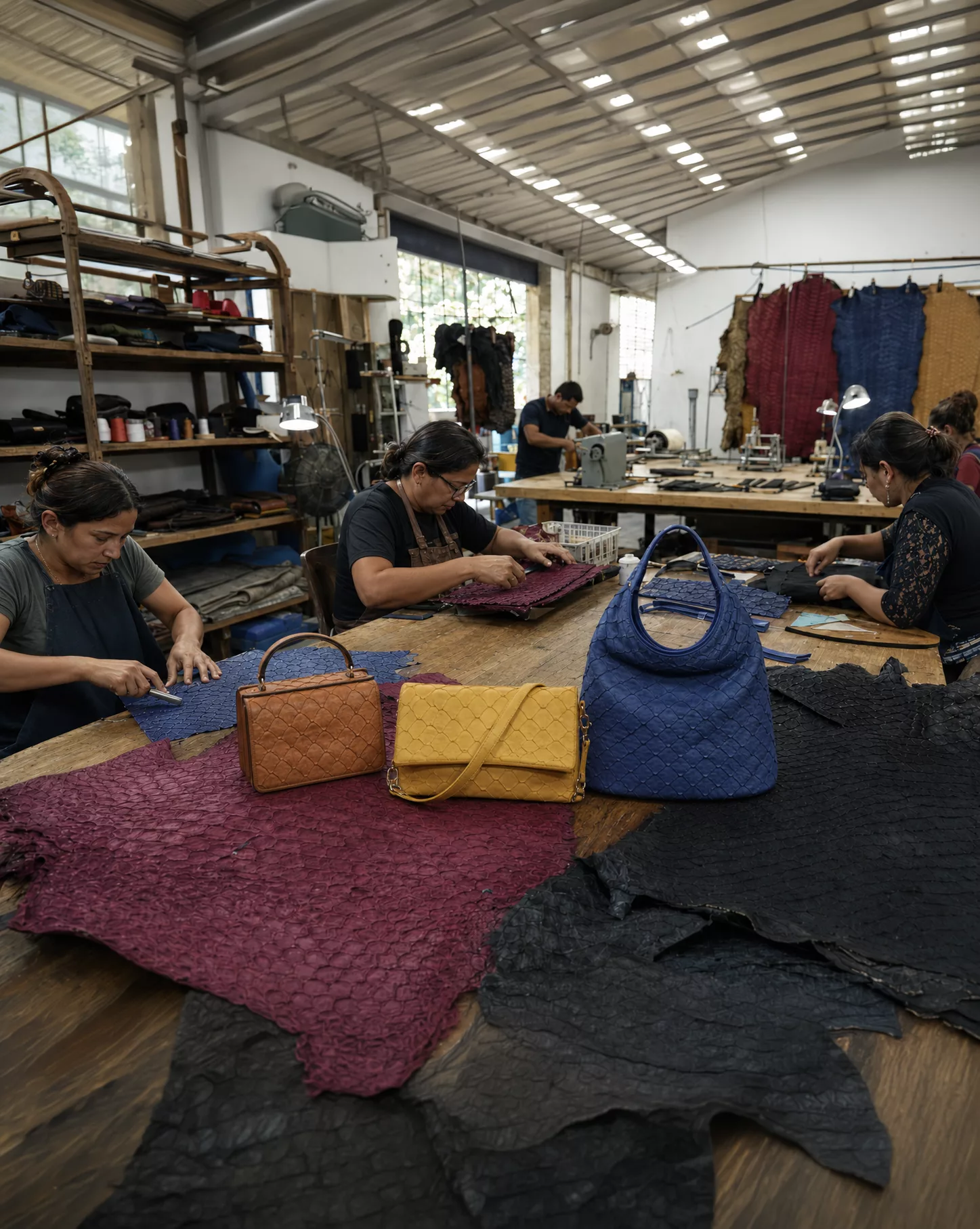 Paiche skin, worked by hand into luxury bags
Standards you can verify
Claims are easy. Documentation is another matter entirely. Explore our certifications and traceability system.
Quality & CertificationsFor Professional Buyers
Exported to the world's finest kitchens
Amazonian Reserve supplies professional kitchens across South America, the United States, Canada, and Europe. Share your region with us and we will direct you to the appropriate sourcing channel.
Contact Us
Bring the Amazon to your kitchen
Discover paiche in your own kitchen. Send us a few details and we will arrange a sample or tasting, with a response within one business day.