
 English
  Español
  Français
  Deutsch
  Italiano
  Português
  Nederlands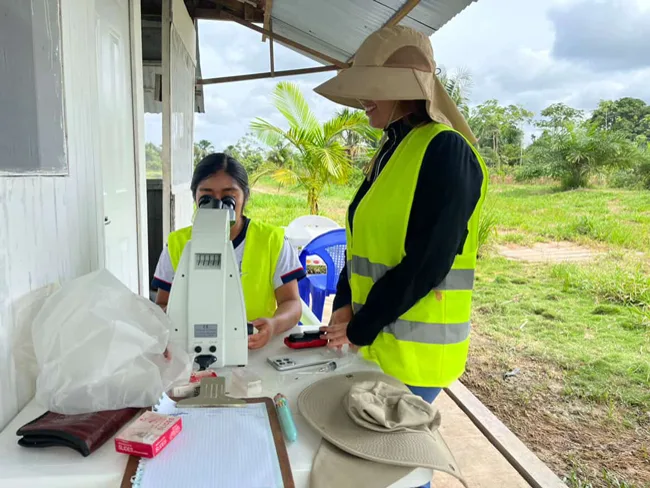
The arapaima is protected in the wild, and yet its flesh is appearing on some of the best menus in the world. The answer to that riddle is aquaculture. Farming the paiche at origin is what makes it possible to serve this fish legally, sustainably, and all year.
A fish built for farming
Few species take to aquaculture like Arapaima gigas. It grows with remarkable speed in its first years, it thrives in warm Amazonian ponds, and because it rises to breathe air at the surface it tolerates conditions that would stress other fish. At Amazonian Reserve the cycle is closed at our own farm. We keep our broodstock, hatch our own fingerlings, raise them on feed we produce, and never use antibiotics.
What the rules say
Arapaima has been listed under CITES Appendix II for decades, which means international trade is only allowed with export permits from the origin country. Farmed paiche qualifies when the operation can prove its fish were raised, not caught. Every Amazonian Reserve shipment travels with its CITES paperwork and a documented trail from pond to port.
Pressure off the river
Every farmed paiche on a plate is one that was never pulled from the river, and the wild population has been recovering for years where protection holds. The farm also gives the region an economy that keeps the forest standing, jobs that depend on clean water rather than cleared land. Even the skin finds a use as an exotic leather, so very little of the fish is wasted. Conservation you can put on a plate is not a slogan. It is how the model works.